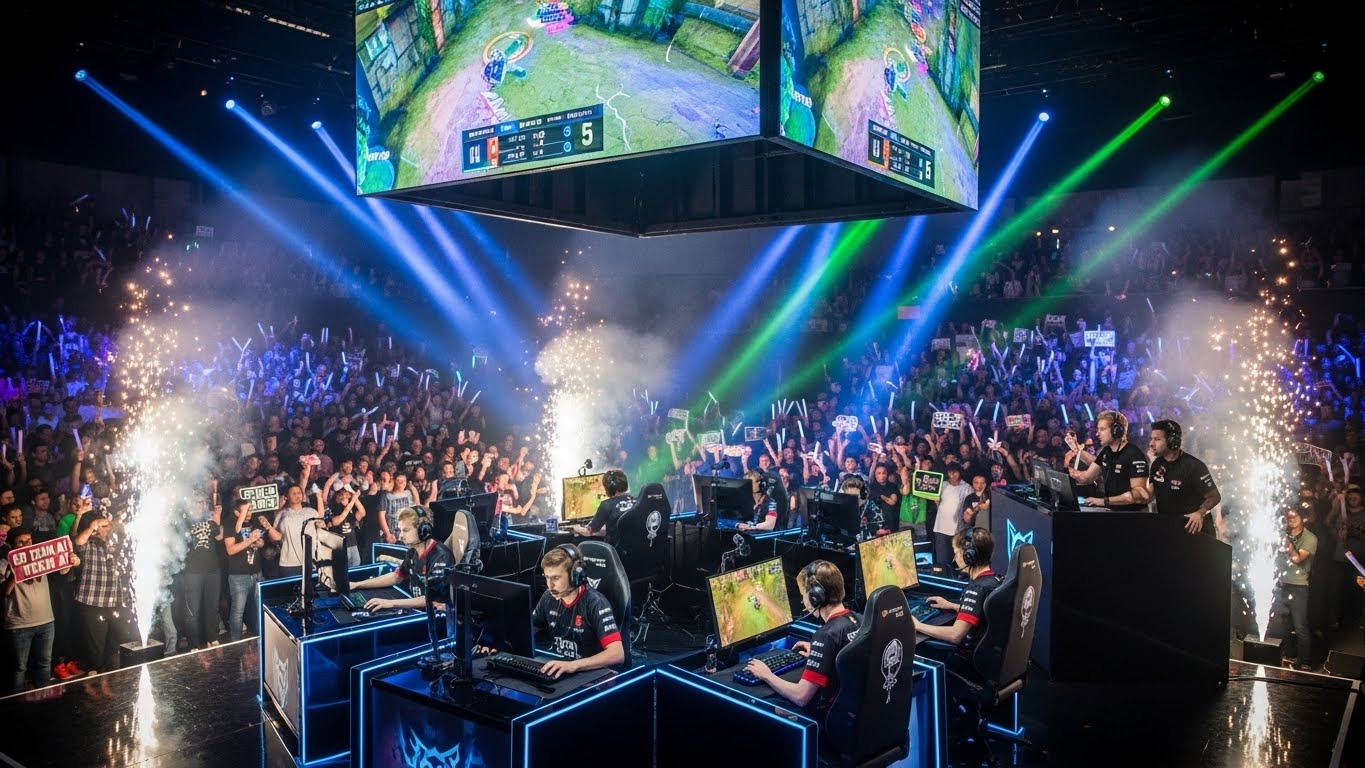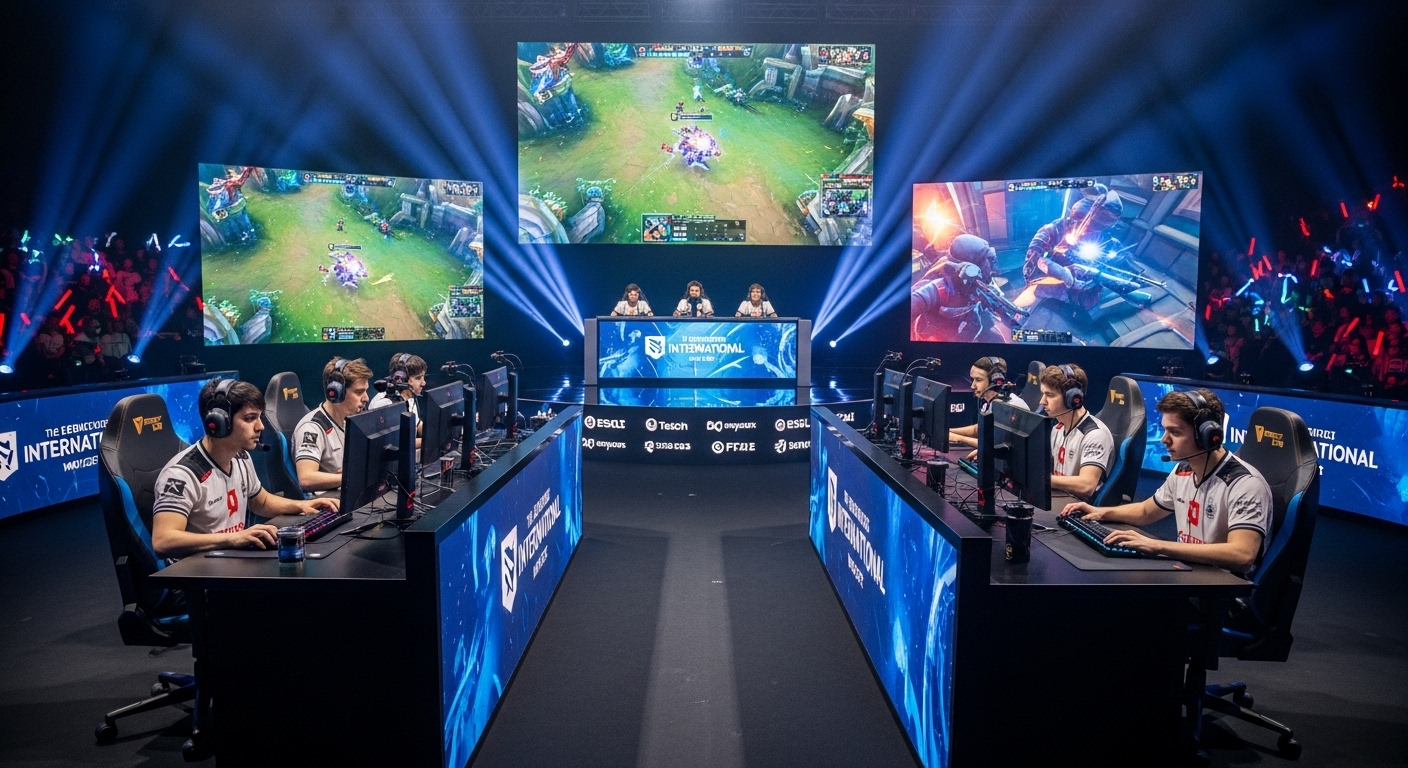

The world of entertainment has evolved rapidly in the last few decades, and one of the most exciting developments has been the rise of eSports. What started as a niche activity among gamers has transformed into a global phenomenon, drawing millions of fans, players, and investors from all corners of the world. Today, eSports is not just a hobby or a competitive pastime—it is a multi-billion-dollar industry that has changed the way we think about both gaming and sports. In this blog post, we will explore how eSports emerged, its rapid growth, the impact on traditional sports, and its future potential.
What Is eSports?
eSports, or electronic sports, refers to organized, multiplayer video game competitions, particularly between professional players, individually or as teams. It’s essentially competitive gaming taken to the highest level, where players engage in tournaments for cash prizes, sponsorships, and fame. Unlike casual gaming, where players play for fun or social interaction, eSports players dedicate countless hours to perfecting their skills, often participating in highly strategic and intense games.
The games themselves vary, but eSports typically revolves around certain genres like first-person shooters (FPS), multiplayer online battle arenas (MOBA), real-time strategy (RTS), and sports simulation games. Popular titles that have been at the forefront of eSports competitions include League of Legends, Counter-Strike: Global Offensive, Dota 2, Fortnite, Overwatch, and FIFA.
The Origins of eSports: From Basement Competitions to International Tournaments
While the term “eSports” might be relatively modern, the roots of competitive gaming can be traced back to the early 1970s. The first known competitive gaming event occurred in 1972 at Stanford University, where students competed in a Spacewar tournament, offering the winner a year-long subscription to Rolling Stone magazine. While that event wasn’t exactly an international spectacle, it marked the beginning of a long tradition of gaming competitions.
It wasn’t until the late 1990s and early 2000s that eSports began to take shape as an organized, large-scale industry. The launch of games like StarCraft, Quake, and Warcraft III helped elevate competitive gaming to a more serious level. These games featured multiplayer modes that allowed players from around the world to compete against each other, which was a major shift from the isolated, single-player experiences that dominated earlier video games.
In 1997, the Red Annihilation tournament for Quake was a landmark event in eSports history. The competition offered a Ferrari as the grand prize, attracting top players and bringing widespread attention to competitive gaming. At the same time, South Korea became one of the first countries to embrace eSports as a national sport, creating infrastructure and institutions for competitive gaming, including televised tournaments, dedicated gaming arenas, and professional gaming teams. This focus on eSports eventually spread to other parts of the world, and the industry began to take off globally.
The Growth of eSports: Big Leagues and Big Money
Over the past decade, eSports has experienced explosive growth, both in terms of participation and viewership. According to industry reports, the eSports market is expected to surpass $1.5 billion in revenue by 2023, with millions of fans tuning in to watch live broadcasts of tournaments and matches. The emergence of streaming platforms, particularly Twitch, has played a pivotal role in eSports’ rise to prominence. Twitch allows gamers to stream their gameplay, interact with their audiences in real time, and build communities around their content. With millions of followers and viewers, top streamers are now celebrities in their own right.
Major eSports events have also begun to rival traditional sports in terms of viewership and prize pools. Take The International, the annual Dota 2 championship tournament, which has set multiple records for prize money. In 2018, the prize pool exceeded $25 million, with the winning team taking home over $11 million. This trend is not limited to Dota 2—games like League of Legends, Counter-Strike: Global Offensive, and Fortnite have also seen prize pools in the millions, attracting top-tier teams and global audiences.
The increasing revenue and sponsorships are a testament to the growing legitimacy of eSports. Companies ranging from tech giants like Intel and Nvidia to beverage brands like Coca-Cola and Red Bull have sponsored eSports teams, events, and tournaments. This influx of sponsorship money has allowed players and teams to earn salaries comparable to athletes in traditional sports.
eSports Players: The New Age Athletes
As eSports has evolved, so too has the status of the players involved. Competitive gamers are no longer seen as hobbyists or “nerds” holed up in their bedrooms; they are professional athletes in their own right, dedicating themselves to hours of practice and competition to hone their skills. The intense focus and discipline required to succeed at the highest levels of eSports mirror that of traditional athletes in sports like basketball, football, or tennis.
Top-tier players undergo rigorous training regimes that often involve practicing for eight hours a day or more. They need to not only master the mechanics of the game but also develop a deep understanding of strategy, teamwork, and communication. Just like traditional athletes, eSports players work with coaches and analysts who help them improve their skills, analyze their gameplay, and develop tactics to outsmart their opponents.
Many professional gamers have also found success outside of the game, building personal brands through social media platforms like Twitter, Instagram, and YouTube. Streamers and players can make substantial income through sponsorships, merchandise sales, and donations from their fans. Some top players have amassed millions of dollars in earnings and built large online followings, elevating them to celebrity status within the gaming community.
eSports Events and Tournaments: The Rise of Major Leagues
The popularity of eSports has led to the creation of professional leagues and organizations, with many of them offering significant prize pools and broadcasting their events to a global audience. The League of Legends World Championship, for example, attracts millions of viewers every year and features teams from around the world battling for the prestigious title and a slice of the multi-million-dollar prize pool. Similarly, The International for Dota 2 and Counter-Strike: Global Offensive competitions draw in large, dedicated fan bases.
In addition to these marquee events, smaller regional leagues and tournaments also play a crucial role in eSports. Leagues like the Overwatch League and the Call of Duty League have been created to provide players with more structured environments to compete at the highest level, much like traditional sports leagues such as the NBA or NFL. These leagues feature franchised teams and have added a layer of consistency to the eSports ecosystem, providing stability for players and teams alike.
One of the most unique aspects of eSports tournaments is the accessibility for fans. Unlike traditional sports, where only those with tickets can attend live events, eSports competitions are often streamed online for free, allowing fans from all over the world to watch the action in real time. The rise of platforms like Twitch, YouTube, and Facebook Gaming has made it easier than ever to tune in to these events, regardless of where you are located.
The Impact of eSports on Traditional Sports
The rise of eSports has had a significant impact on traditional sports. The crossover between eSports and traditional sports is growing, with many professional sports teams, including NBA franchises, becoming involved in the eSports space. For example, the NBA has partnered with Take-Two Interactive to create the NBA 2K League, a professional eSports league based on the NBA 2K video game series. This collaboration allows basketball fans to engage with the sport in a new, digital format.
Traditional sports teams are also investing in eSports teams, seeing an opportunity to tap into a younger, more digitally-savvy audience. Many NFL, NHL, and European football clubs have established their own eSports teams or entered partnerships with existing organizations. This convergence of eSports and traditional sports demonstrates the increasing recognition of competitive gaming as a legitimate form of entertainment.
Furthermore, eSports has had an impact on the way people consume entertainment. Young viewers, in particular, are increasingly drawn to eSports over traditional sports, as they are more comfortable with digital content and prefer the interactive nature of live-streaming platforms. The success of eSports events, which often feature fan engagement, real-time interaction with players, and community-driven content, highlights a shift in consumer preferences toward more immersive and participatory experiences.
The Future of eSports: Beyond Gaming
The future of eSports appears incredibly bright, with continued expansion on the horizon. As technology advances, we are likely to see more innovations in virtual reality (VR) and augmented reality (AR), further enhancing the spectator experience. Imagine watching an eSports tournament in VR, where fans can feel as if they are sitting courtside or right in the middle of the action. These technologies could revolutionize the way people experience competitive gaming, making it even more immersive.
Moreover, eSports is expected to continue growing its reach into mainstream entertainment. With the increasing popularity of mobile gaming, eSports on mobile platforms is set to become a major part of the industry. Games like PUBG Mobile and Clash Royale have already introduced mobile-specific tournaments, and the rise of mobile-first eSports could open up the industry to a whole new demographic of players and fans.
The rise of eSports as a form of entertainment also creates opportunities for educational institutions. Many colleges and universities are now offering eSports scholarships, and specialized programs in eSports management and development are beginning to take shape. As the industry matures, we can expect to see more formalized career paths in eSports, from coaching and event management to game design and broadcasting.