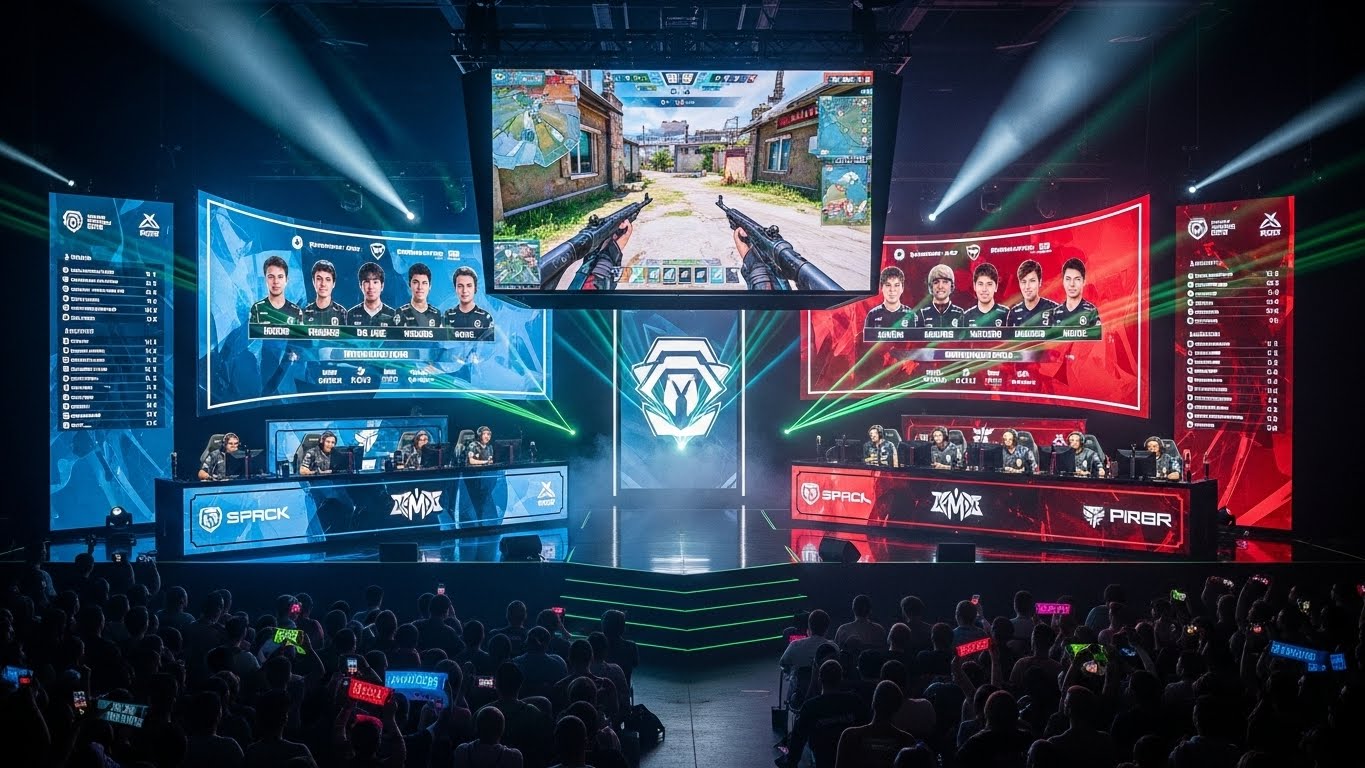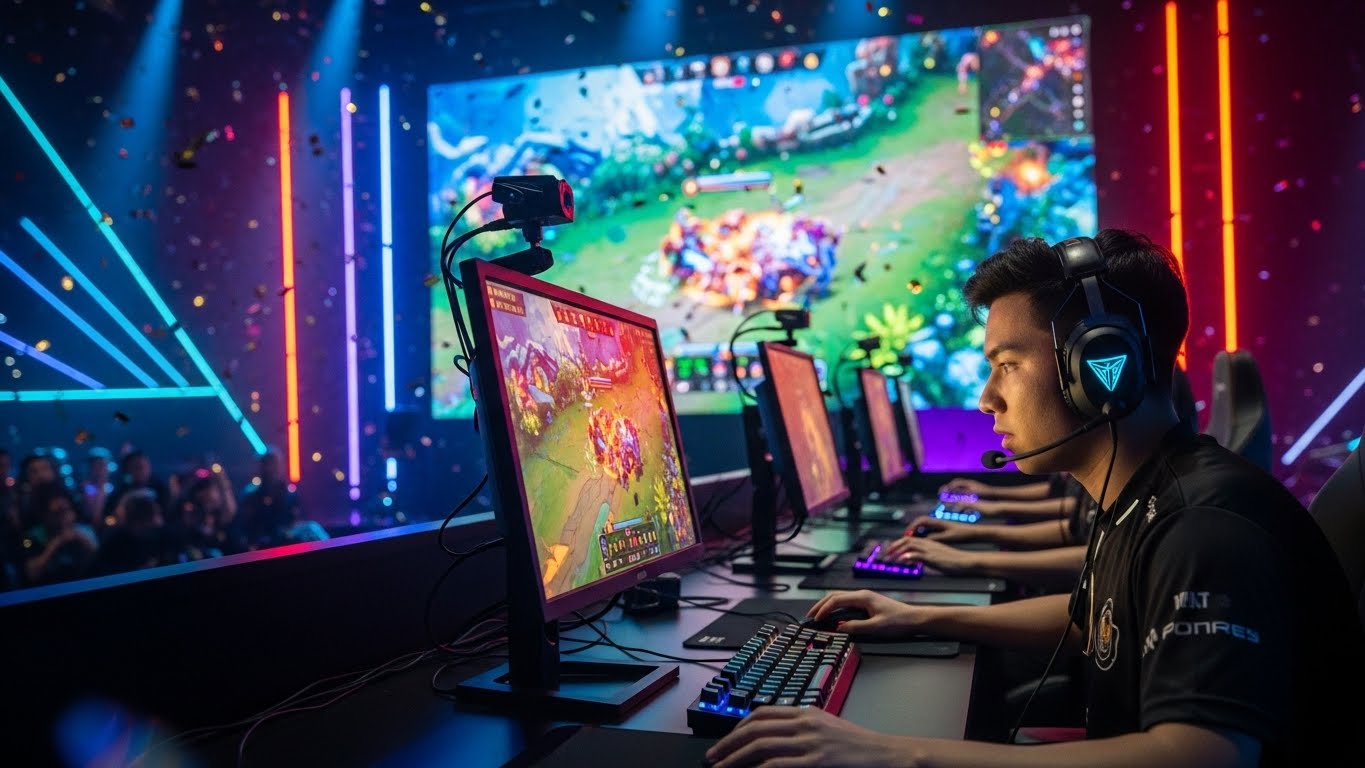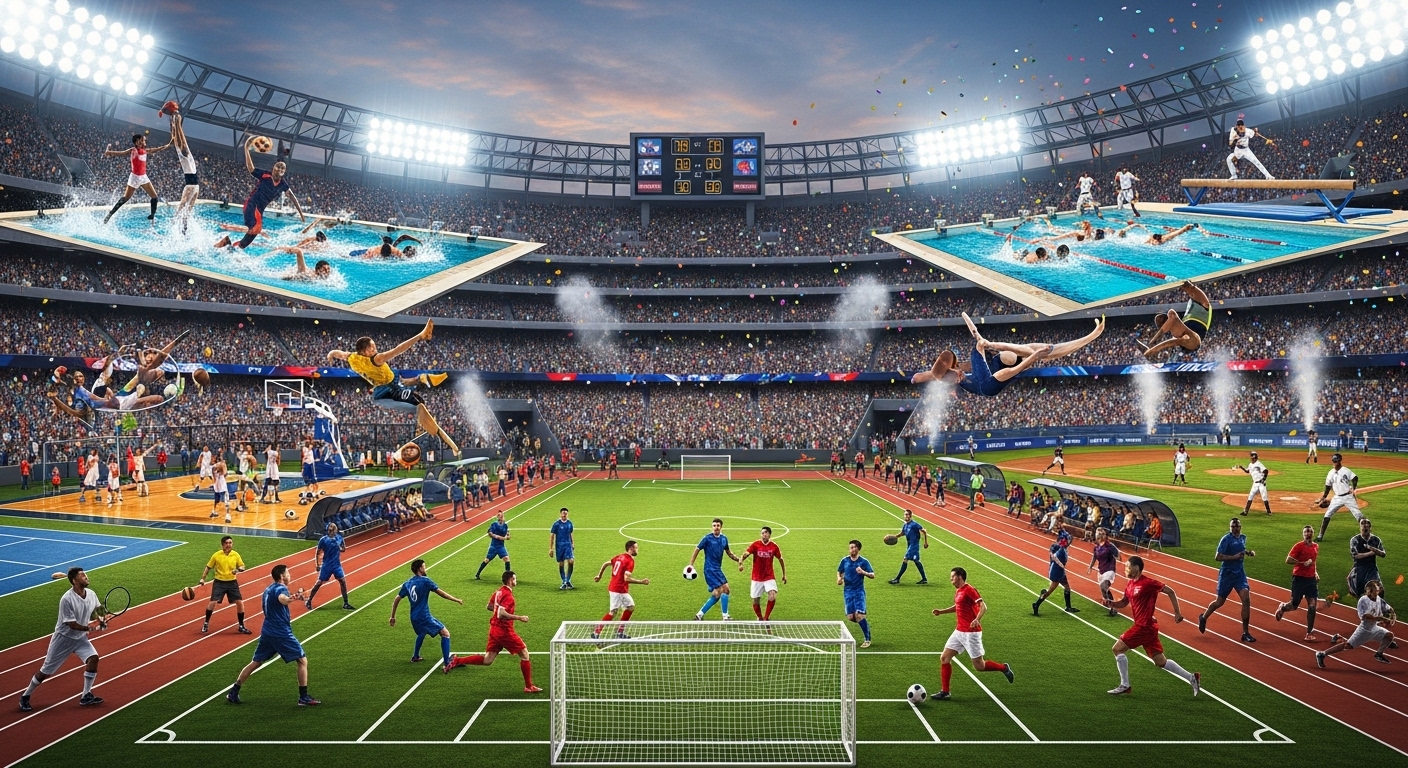

Esports is not just a trend or a playful buzzword tossed around by teenagers who spend too much time with controllers. It has evolved into a worldwide cultural phenomenon, a sport of dazzling lights and lightning-quick reflexes, where keyboards become swords, headsets become helmets and digital arenas roar as loudly as football stadiums. Gone are the days when gaming was dismissed as a lazy pastime. Today, it is a legitimate profession powered by passion, precision and the pursuit of digital glory.
At its heart, Esports is short for electronic sports, a term that captures organized competitive gaming at amateur and professional levels. What once started in basements and small neighborhood cyber cafés has now cracked open the ceiling and transformed into grand stages, huge arenas and million-dollar championships. Think of gladiators in a futuristic arena, except the swords are replaced by pixels and strategy, yet the intensity is equally fierce.
The Early Origins: When Gaming Wasn’t Taken Seriously
In the early days of video games, competitions were tiny gatherings where bragging rights were more valuable than gold medals. Arcade machines beeped with joy as players lined up their coins, determined to break high scores. Titles like Space Invaders and Pac-Man sparked friendly rivalries, but nobody then imagined the colossal empire Esports would soon become.
Even in the 1990s, gaming tournaments felt more like underground clubs. Players sat close enough to hear every sigh and mouse click. There were no glamorous sponsors, no flashy lights, just raw skill and passion. People played because they loved to compete, to push themselves to their limit and savor that thrilling final victory screen.
But every revolution begins quietly, and little did the world know it was witnessing the birth of a titan.
The Explosion of Online Play: Where the World Joined the Game
The introduction of online gaming acted like rocket fuel poured onto glowing embers. Suddenly, competitors no longer needed to be in the same room. The entire planet became a playground. South Korean gamers battled Americans without ever shaking hands, and strategy began to soar beyond geographical boundaries.
Titles like StarCraft took the globe by storm, becoming the chess of the digital world. South Korea embraced it so passionately that professional leagues emerged, turning skilled players into household celebrities. Stadiums filled with fans who cheered at every click of a mouse. Esports was evolving into something enormous, and the world was taking notice.
As technology improved, so did opportunities. Faster internet, better graphics and more complex game designs created competitive ecosystems deeper than any had imagined. The digital age had formed a new kind of athlete.
Professional Players: Athletes of the Digital Battlefield
To the untrained eye, a gamer might look like someone lounging on a chair, fingers dancing lazily on a keyboard. But in truth, Esports athletes are warriors. They train rigorously, often 8 to 12 hours a day. They perfect strategies, sharpen reaction times measured in milliseconds and follow strict routines similar to physical sports.
Mental endurance becomes a superpower. One moment of hesitation can turn triumph into tragedy. Eyes must flick across the screen faster than a hummingbird’s wings. Communication teamwork discipline, emotional control every element matters. These players embody precision.
Negotiating contracts, managing fanbases and handling pressure thicker than a boss fight health bar these tasks accompany their craft. They are athletes of mind and muscle in equal measure.
The Games That Define a Generation
Esports is not dominated by a single heroes but by many kingdoms, each with its own legends. Some titles etched themselves into the walls of gaming history. Here are a few that shaped the battlefield:
- League of Legends
A strategic war between five-player teams, where champions unleash breathtaking abilities and team coordination becomes the ultimate weapon. - Counter-Strike Global Offensive
Terrorists and counter-terrorists face off in tight corners and tense moments, where accuracy defines existence. - Dota 2
A grand spectacle of spells, strategies and smashing ancient structures, with tournaments awarding life-changing prize pools. - Fortnite
Battle royale chaos that combines building, shooting and dancing, capturing younger audiences with its fast-paced charm. - Rocket League
Cars playing high-speed football because reality clearly wasn’t wild enough.
Each game builds its own culture, its own superstars and its own fiercely loyal fans who cheer every pixelated victory and mourn every defeat.
Tournaments That Transform Gamers into Legends
Professional Esports tournaments today are spectacles worthy of myth. Massive crowds flood into arenas with lights pulsing to the rhythm of excitement. Announcers shout with infectious energy. Fans wave banners for their digital heroes like ancient followers cheering their champions in battle.
Prize pools are no joke. Some reach millions, turning lucky moments into fortunes. Teams leap from unknown to unstoppable in a matter of matches. World Championships, Majors and seasonal Leagues mirror traditional sports in structure and prestige.
Streaming has become the stage upon which players shine. Millions tune in live from the comfort of their homes, creating communities so strong they feel like families. Esports has reached a point where the cheering never ends.
The Business Behind the Games: Money Levels Up
Money and Esports have formed a dynamic duo that grows larger by the minute. Sponsorship deals flow in from tech companies, energy drink brands and even automobile giants. Players have managers, nutritionists and marketing teams ensuring their brand remains powerful.
Merchandise flies off shelves as fans proudly wear their favorite team jerseys. Media rights, advertising and stadium ticket sales make Esports one of the fastest-growing industries in entertainment.
Colleges and universities have launched Esports scholarships, turning passionate gamers into students with official academic support. Parents once nervous about gaming now see it as a genuine pathway to success.
Streaming Platforms: The New Grandstands
Platforms like Twitch and YouTube Gaming turned every gamer into a potential star. Instead of waiting to be discovered, players broadcast their skills to the world. Audiences chat, cheer and follow their favorite personalities with more devotion than fans of movie celebrities.
Streaming knocked down the walls between professional players and viewers. Fans receive live commentary, personal stories and humor served fresh with every broadcast. The digital audience is now as important as the game itself.
Some streamers never compete professionally, yet they outperform athletes in fame and income through charisma alone. In Esports, personality can be as powerful as performance.
Training Facilities and Team Houses: Digital Fortresses of Focus
Professional teams often live together in futuristic training houses. These are laboratories of perfection where every member trains, eats and strategizes for hours on end. Coaches analyze game replays the way generals examine battle footage.
State of mind matters deeply. Teams study psychology, teamwork dynamics and stress management. Performance is measured like a science experiment, because even small improvements can tilt the odds of victory.
These training spaces sculpt talents into unstoppable forces.
Esports Fans: The Heartbeat of the Arena
No sport survives without those who cheer from the shadows and beam excitement like electricity. Esports fans are among the most passionate souls on the planet. They memorize stats, worship pro players and stay up at impossible hours just to watch a match.
Inside arenas, the roar is thunderous. Online, entire comment sections explode into celebration or heartbreak with a single play. Cosplayers dress as game characters to show loyalty and creative spirit. Communities thrive on joy and fandom.
Where there are fans, you find love. Where there is love, a sport lives forever.
Challenges and Criticisms: Not All Power-Ups Are Positive
Every shining sword has its cracks, and Esports faces serious struggles. Some critics argue that gaming addiction can harm mental health. Others worry about young players juggling school and professional life. Injuries like wrist strain and back pain can also affect careers.
Toxic behavior in online environments remains a monster still being fought. Professional pressure can take its toll, causing burnout among top talents who push themselves too hard.
But with awareness and effort, the industry works daily to create safer, healthier environments. Progress may be slow, but it is happening.
Gender Diversity: Breaking Down Barriers
Esports remains dominated by male players, but powerful women are rising rapidly. Female gamers compete fiercely, defying stereotypes and showing the world that skill knows no gender. More organizations are supporting women’s tournaments to encourage equal opportunity.
Equality in Esports is still a quest in progress, but it is one of the most important missions of this new era.
Esports in Education: From Classroom to Arena
Some schools now see Esports as an academic tool that promotes teamwork, problem-solving and digital awareness. Clubs and school leagues prepare students for future careers whether playing professionally, managing teams or designing games.
Students learn communication, leadership and resilience through competitive gaming. The next generation of Esports legends may be studying algebra by day and practicing digital warfare by night.
Cultural Impact: A New Language of Entertainment
Esports has left fingerprints on the entire world. Gaming slang becomes universal. Memes power social conversations. Music festivals feature game influences. Celebrities join teams. Esports is more than entertainment it is a cultural transformation reshaping how younger generations interact and dream.
Where traditional sports rely on physical fields, Esports lives in imagination. Every update brings fresh momentum, new characters and innovative tactics. The evolution never stops.
The Future of Esports: The Sky Isn’t High Enough
Esports stands on the edge of infinite expansion. Virtual reality competitions may soon feel like stepping into the game itself. Augmented reality could merge physical and digital sports into thrilling hybrid challenges. Artificial intelligence may train players or become opponents too tough to conquer.
Esports could become a permanent part of the Olympics someday, uniting nations through keyboards and controllers. The industry is young, hungry and ambitious and the universe of pixels stretches endlessly ahead.
Why Esports Matters: The Power of Digital Passion
At the core, Esports proves that passion unites people, no matter where they come from. It reminds us that games are not childish distractions but gateways to creativity, community and competition. When players fight together, they form bonds like warriors who have stormed a thousand battles.
Esports gives dreamers a chance. Anyone with a device and determination can rise to greatness. Skill beats status. Strategy beats size. The underdog can defeat the titan with one brilliant play.
It is a world where imagination reigns and excitement never sleeps.
Conclusion: The Game Is Just Beginning
Esports is a story in progress, still leveling up with every passing day. What started as arcade fun now rules global entertainment like a digital king. Broadcasting lights illuminate the determination on players’ faces. Fans chant as if cheering armies forward. Prize pools build kingdoms. Games write legacies that last forever.
This electrifying new sport is not just a game. It is a lifestyle, a dream machine and a revolutionary playground where the power of competition meets the magic of technology.
Whether you are a devoted gamer, a curious observer or a fan searching for heroes you will find a home in Esports. And just like any epic adventure, the next match, the next championship and the next champion await.
So log in. Suit up. The battlefield of pixels and passion is ready.
The future of Esports has only just begun.