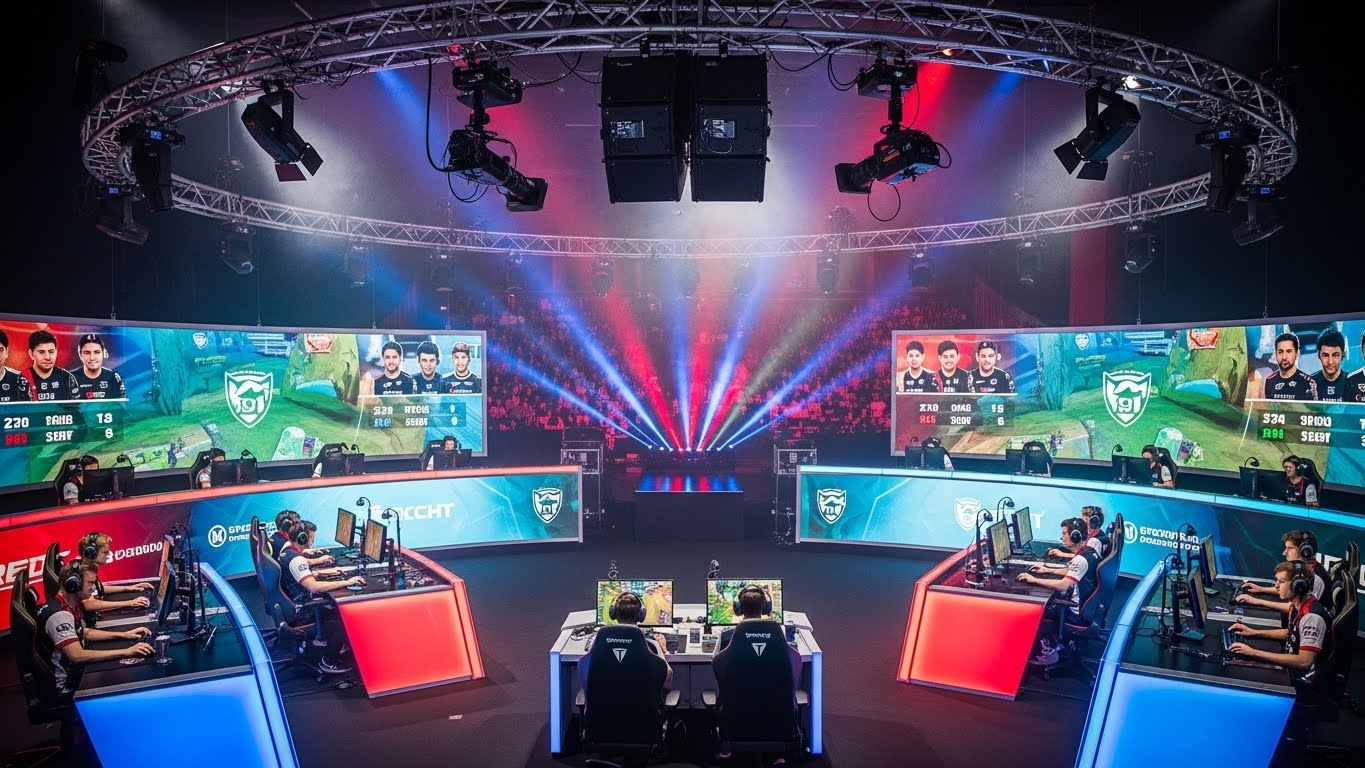

In the world of modern entertainment, few industries have evolved as rapidly and as profoundly as esports. Competitive gaming, once an obscure pastime for a select few, has exploded into a multibillion-dollar global industry. Today, esports spans across the globe, drawing millions of viewers and players, while creating careers and opportunities that weren’t even imaginable just a decade ago.
Esports has become more than just a niche activity for gamers; it has become a cultural force, reshaping how we think about sports, entertainment, and competition. From sold-out arenas to massive online streams, from players being treated as professional athletes to sponsorships from major corporations, the esports industry is a phenomenon that continues to expand. In this blog post, we will take a deep dive into the rise of esports, explore the factors that contributed to its growth, and look ahead at what the future holds for the competitive gaming world.
What Exactly Is Esports?
Esports refers to organized, multiplayer video game competitions, often between professional players, teams, or organizations. These competitions are typically held in popular video games such as League of Legends, Counter-Strike: Global Offensive, Dota 2, Fortnite, and Overwatch, among others. Esports is a broad category that encompasses not only the competitive play itself but also the surrounding industry, which includes streaming, broadcasting, team management, coaching, content creation, and sponsorships.
While esports began as small-scale tournaments in the 1990s and early 2000s, the rise of the internet, gaming technology, and streaming platforms in the following decades transformed esports into a massive global industry. In addition to playing games, many esports professionals also serve as content creators, streaming their gameplay on platforms like Twitch, YouTube, and Facebook Gaming, further fueling the growth of the industry.
The Early Days of Esports
The origins of esports can be traced back to the late 1990s, when competitive gaming began to gain traction through LAN (Local Area Network) tournaments. These events were typically small and localized, with players gathering in person to compete in games like Quake and StarCraft. However, it wasn’t until the early 2000s that esports began to take on a more professional and organized structure.
In 2000, the World Cyber Games (WCG) was founded, one of the first international esports competitions, helping to solidify esports as a legitimate form of competitive play. The introduction of online multiplayer games like Warcraft III and Counter-Strike opened up new possibilities for online competitions, allowing players from all over the world to participate in tournaments without needing to be in the same location.
By the mid-2000s, esports was no longer just a hobby for gamers; it was emerging as a legitimate career path. Organizations, teams, and sponsors began to take notice of the growing interest in esports, leading to larger prize pools, more extensive coverage, and greater recognition within the mainstream media. Esports, which had once been limited to a small community of players and fans, was now ready to go global.
Key Drivers of Esports’ Explosive Growth
Several factors contributed to the explosive growth of esports over the past decade. Let’s explore some of the most significant drivers behind the rise of competitive gaming.
1. The Proliferation of Streaming Platforms
One of the most influential developments in the rise of esports was the advent of streaming platforms like Twitch. In 2011, Twitch launched as a platform dedicated to live video game streaming, allowing players to broadcast their gameplay to global audiences. This was a game-changer for esports, as it provided an accessible way for fans to watch professional players and tournaments in real time.
Twitch’s success sparked a wave of other platforms entering the streaming space, including YouTube Gaming and Facebook Gaming, making it easier for esports to reach a larger audience. Streaming allowed viewers to interact with players and teams directly, creating a more engaged and dedicated fanbase. Streamers could also monetize their channels through ads, sponsorships, and fan donations, turning competitive gaming into a career path for those with the right skills and charisma.
2. The Accessibility of Online Multiplayer Games
The rise of online multiplayer games has also played a significant role in esports’ growth. Games like League of Legends, Dota 2, Counter-Strike: Global Offensive, and Fortnite have made it possible for players from around the world to compete against one another without needing to leave their homes. Unlike traditional sports, which require physical space, equipment, and infrastructure, competitive gaming only requires an internet connection, a gaming platform (PC, console, or mobile), and the game itself.
This level of accessibility has made esports more inclusive, as players from all walks of life can participate in global competitions. The ease of entry into esports, coupled with the widespread popularity of free-to-play games, has created a large and diverse pool of competitors. As a result, esports has been able to tap into emerging markets such as Southeast Asia, Latin America, and parts of Africa, which has further contributed to its global growth.
3. Sponsorships and Corporate Investment
The influx of corporate sponsorships and investments has helped propel esports into the mainstream. Major global brands, from tech giants like Intel and NVIDIA to beverage companies like Coca-Cola and Red Bull, have recognized the massive potential of esports as a marketing platform. These companies have provided significant funding for tournaments, team sponsorships, and even game development.
Esports has also attracted large-scale investments from traditional sports organizations. For example, NBA teams like the Philadelphia 76ers and the Los Angeles Lakers have acquired esports teams, creating a crossover between traditional sports and esports. The involvement of these high-profile investors has lent legitimacy to the esports industry, encouraging more companies to get involved and provide financial backing.
4. The Rise of Mobile Gaming
Mobile gaming has been another key factor in the expansion of esports. Games like PUBG Mobile, Clash Royale, Free Fire, and Call of Duty Mobile have introduced competitive gaming to a whole new demographic, especially in emerging markets where mobile devices are more accessible than high-end gaming PCs or consoles.
Mobile esports tournaments have gained significant popularity, particularly in regions like Southeast Asia, India, and Latin America. These tournaments often feature large prize pools and draw millions of viewers online, making mobile gaming an integral part of the overall esports ecosystem.
Popular Esports Games and Major Tournaments
While there are a wide variety of games that fall under the esports umbrella, a few have emerged as dominant forces in the industry. These games have become central to the esports ecosystem, with professional leagues, massive viewership, and substantial prize money.
1. League of Legends (LoL)
League of Legends is arguably the most popular and influential esports title in the world. Developed by Riot Games, LoL is a multiplayer online battle arena (MOBA) game where teams of five players compete to destroy the enemy team’s base. The game’s strategic depth, frequent updates, and global appeal have made it a cornerstone of esports.
The League of Legends World Championship, held annually, is one of the biggest esports events in the world, attracting millions of viewers from around the globe. With a prize pool that often exceeds $2 million, the World Championship has become the pinnacle of competitive gaming, drawing the best teams and players from every continent.
2. Dota 2
Dota 2, developed by Valve Corporation, is another titan of the esports scene. Known for its complexity and strategic depth, Dota 2 has garnered a massive fanbase and hosts one of the largest esports tournaments in the world: The International. The International regularly features prize pools of over $30 million, making it one of the richest esports tournaments.
The game’s highly competitive nature and long-standing professional scene have helped it maintain its position as one of the top esports games, with both players and viewers continuously drawn to its thrilling and unpredictable matches.
3. Counter-Strike: Global Offensive (CS:GO)
Counter-Strike: Global Offensive (CS:GO) is a first-person tactical shooter game that has been a staple of the esports scene since its release in 2012. The game’s simple yet highly competitive mechanics, where two teams of five players battle to plant or defuse bombs, have made it a fan favorite.
CS:GO tournaments, such as the CS:GO Major Championships, attract millions of viewers, and the game continues to be one of the top choices for competitive gaming.
4. Fortnite
Fortnite, developed by Epic Games, revolutionized the battle royale genre and took the world by storm upon its release in 2017. The game’s free-to-play model, combined with its fun and accessible gameplay, has made it a hit with both casual players and competitive gamers.
In 2019, Epic Games held the Fortnite World Cup, which offered a prize pool of $30 million, one of the largest in esports history. The event was widely regarded as a milestone for the esports industry, cementing Fortnite as a dominant force in competitive gaming.