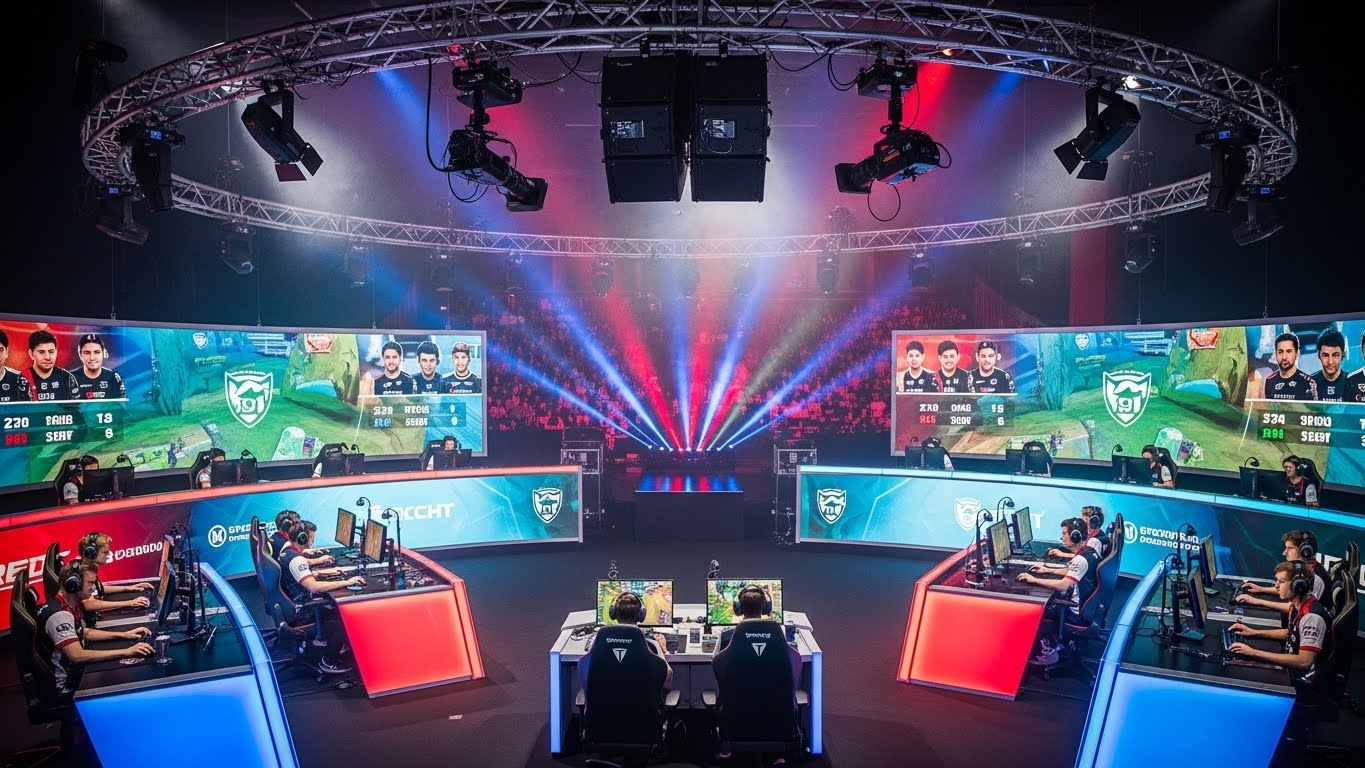

Esports, short for electronic sports, has evolved from casual gaming sessions among friends to a billion-dollar global industry that commands stadiums, streaming platforms, and millions of loyal fans. What was once dismissed as a niche hobby for teenagers has transformed into a legitimate professional scene, complete with sponsorships, coaching staffs, team franchises, and player salaries that rival traditional athletes. The evolution of esports represents not only the growth of gaming culture but also the fusion of technology, entertainment, and human competitiveness in the digital age.
The Origins of Competitive Gaming
The earliest forms of esports trace back to the 1970s when universities hosted tournaments on rudimentary computers. The first recorded gaming competition occurred at Stanford University in 1972, centered around the game “Spacewar.” The winner received a year’s subscription to Rolling Stone magazine — a far cry from today’s multi-million-dollar prizes. Through the 1980s, video games like Pac-Man and Donkey Kong gained mass popularity, and arcade competitions became a common form of local entertainment.
By the 1990s, the internet began connecting players across the globe, setting the stage for true digital competition. Games like Doom, Quake, and StarCraft pioneered online multiplayer experiences, giving rise to early esports communities. Players began forming teams, creating tournaments, and developing reputations in the small but rapidly growing world of competitive gaming.
The 2000s: The Birth of the Modern Esports Era
The 2000s marked the beginning of what we now recognize as organized esports. Broadband internet, improved gaming PCs, and the rise of local area network (LAN) events gave players access to higher competition levels. South Korea became the epicenter of esports, largely thanks to StarCraft: Brood War. Television channels broadcasted matches, players became celebrities, and gaming houses were established to train full-time professionals.
Around the same time, Western countries saw the rise of competitive titles like Counter-Strike, Warcraft III, and Halo. The Cyberathlete Professional League (CPL) and Major League Gaming (MLG) began hosting global tournaments, offering large prize pools and structured league systems. Esports was no longer a hobby; it had become a profession.
The Streaming Revolution: Twitch and YouTube
One of the most transformative moments for esports came in the early 2010s with the emergence of live-streaming platforms. Services like Twitch and YouTube Gaming gave fans front-row seats to watch their favorite players and teams compete in real-time. This accessibility changed everything.
No longer limited by geography or television rights, esports reached every corner of the internet. Fans could interact directly with players through live chats, follow entire tournaments from their phones, and even stream their own gameplay to start personal brands. Streamers like Ninja, Shroud, and Pokimane blurred the line between professional gamers and entertainers.
The impact of streaming was twofold: it democratized esports viewership and created an entirely new ecosystem for sponsorships and advertising. Brands realized that esports audiences were young, engaged, and global — the perfect demographic for modern marketing.
Global Tournaments and the Rise of the Franchise Model
As viewership skyrocketed, game publishers began investing heavily in organizing large-scale tournaments. Riot Games launched the League of Legends World Championship, Valve introduced The International for Dota 2, and Blizzard followed with the Overwatch League. These tournaments drew millions of viewers, rivaling traditional sports events in scale and production value.
One of the biggest innovations was the introduction of the franchise model. Borrowed from traditional sports, this structure allowed investors to buy permanent spots for their teams within a league. It brought stability, predictable revenue, and professional management to esports organizations. Franchises like Cloud9, Fnatic, T1, and FaZe Clan became household names, building fanbases that extended beyond any single game.
The Esports Athlete: Training, Discipline, and Mental Endurance
Contrary to popular belief, professional gamers undergo rigorous training regimens similar to athletes in physical sports. They spend up to ten hours a day practicing mechanics, studying opponents, and coordinating with coaches and analysts. Reaction time, precision, and mental endurance are key components of performance.
Teams often employ sports psychologists and nutritionists to maintain players’ mental and physical health. Sleep cycles, diet, and stress management play significant roles in performance longevity. Esports athletes must also cope with the mental strain of public exposure, online criticism, and the ever-changing meta of their respective games.
The competitive lifespan of an esports player is often shorter than that of traditional athletes. Reflexes tend to peak in one’s early twenties, and the burnout rate is high due to constant practice and travel. Yet, even after retirement, many players transition into coaching, streaming, or content creation, extending their careers within the industry.
Game Genres Dominating Esports
Esports spans multiple genres, each attracting its unique audience and competitive format.
Multiplayer Online Battle Arenas (MOBAs): Games like League of Legends and Dota 2 dominate with strategic depth and massive international tournaments.
First-Person Shooters (FPS): Titles such as Counter-Strike: Global Offensive, Valorant, and Call of Duty focus on precision and teamwork.
Battle Royale Games: Fortnite, Apex Legends, and PUBG blend survival, shooting, and strategy into fast-paced competition.
Fighting Games: The Street Fighter and Super Smash Bros. communities maintain a grassroots charm while showcasing incredible individual skill.
Sports Simulations: FIFA, NBA 2K, and Rocket League bring traditional sports fans into the esports ecosystem.
Each genre contributes to the diversity and inclusivity of the esports landscape, ensuring that nearly every type of gamer finds a competitive home.
The Economic Boom: Esports as an Industry
Today, esports is a multi-billion-dollar industry fueled by sponsorships, media rights, merchandise, ticket sales, and streaming revenue. Major corporations like Coca-Cola, Intel, Red Bull, and BMW invest heavily in teams and tournaments. Cities compete to host esports events because they draw tourism and generate local economic boosts similar to traditional sporting events.
Esports organizations operate like businesses, with departments for marketing, content, management, and analytics. Teams sign endorsement deals, create branded merchandise, and collaborate with fashion and technology companies. The line between gaming and mainstream culture continues to blur, with celebrities and athletes investing in teams or even starting their own.
In addition, universities now offer esports scholarships, and high schools form competitive teams. This legitimization underscores that esports is not merely a pastime but a viable career path.
The Cultural Impact of Esports
Esports has transformed how society perceives gaming. Once stigmatized as an antisocial hobby, gaming is now celebrated as a form of expression, creativity, and competition. Esports tournaments fill arenas once reserved for concerts or traditional sports. Events like League of Legends Worlds and The International attract tens of thousands of live attendees and tens of millions of online viewers.
Moreover, esports has become a unifying cultural force. Players and fans from different backgrounds connect through shared experiences, overcoming language barriers and geographical divides. The global community that gaming fosters is one of its most powerful aspects.
Women in Esports: Breaking Barriers
While esports remains male-dominated, women have been steadily carving out their place in the scene. Professional players, commentators, and content creators such as Sasha “Scarlett” Hostyn, Kristen “KittyPlays” Valnicek, and Rumay “Hafu” Wang have paved the way for gender inclusivity.
Organizations and initiatives now focus on promoting diversity and providing safe spaces for female gamers to compete and grow. Mixed tournaments and all-women leagues are steps toward equality, ensuring that talent, not gender, determines success. The future of esports will depend heavily on maintaining inclusivity across all levels of competition.
Esports and Education
Esports’ integration into education systems reflects its growing legitimacy. Universities worldwide have launched esports management programs, blending gaming expertise with business, marketing, and technology studies. Students learn about event planning, broadcasting, psychology, and player management.
Some institutions even offer esports degrees and host intercollegiate tournaments. Schools that once dismissed gaming now see it as a gateway to careers in technology, media, and entrepreneurship. This academic embrace not only legitimizes esports but also cultivates the next generation of industry professionals.
Technology and the Future of Esports
Advancements in technology continue to shape esports’ evolution. Virtual reality (VR) and augmented reality (AR) promise immersive competitive experiences, while artificial intelligence enhances game design, analytics, and player coaching.
5G networks have also improved mobile esports, allowing high-speed gaming on smartphones without lag. Titles like Mobile Legends and PUBG Mobile dominate Asian markets, demonstrating that competitive gaming isn’t confined to PCs and consoles.
Moreover, blockchain and digital collectibles, such as NFTs, are being integrated into esports ecosystems, allowing fans to own and trade digital memorabilia from their favorite teams and tournaments.
Challenges Facing Esports
Despite its success, esports faces several hurdles. Player burnout, lack of standardized regulations, and inconsistent pay structures remain issues. Cheating, match-fixing, and doping scandals have also tainted parts of the industry.
The rapid pace of game updates can also destabilize competitive balance, forcing players to constantly adapt. Additionally, maintaining audience engagement across multiple titles is a challenge, as trends shift quickly in the gaming world.
The esports ecosystem also grapples with sustainability concerns. While sponsorships and media rights bring in revenue, profitability for individual teams remains inconsistent. Finding long-term stability is key to ensuring that esports continues to grow beyond hype cycles.
Esports and Traditional Sports: A New Rivalry and Partnership
Esports and traditional sports share more similarities than differences. Both require teamwork, strategy, and peak performance. However, esports offers something unique: accessibility. Anyone with a computer or console can train, compete, and potentially rise to professional status.
Interestingly, the relationship between the two industries has become symbiotic rather than competitive. Traditional sports franchises invest in esports teams, and esports events adopt sports-like production and commentary styles. For example, the NBA launched the NBA 2K League, blending basketball culture with gaming.
As younger generations grow up consuming digital entertainment rather than cable television, esports serves as a bridge between old and new forms of sports entertainment.
Esports and the Metaverse
The concept of the metaverse — a shared virtual space where users can interact, play, and socialize — has significant implications for esports. In this interconnected digital world, spectators could attend virtual arenas, interact with players’ avatars, and even participate in real-time mini-events during tournaments.
The metaverse could revolutionize fan engagement by making the viewing experience interactive rather than passive. Imagine watching a match inside the game environment, controlling your camera angle, or chatting with other fans in virtual stands. The potential for innovation is limitless.
The Social and Psychological Side of Esports
While esports offers entertainment and career opportunities, it also raises important discussions about mental health. The pressure to perform, constant online scrutiny, and intense competition can lead to stress and anxiety.
Organizations now emphasize mental wellness programs, recognizing that sustainable performance requires emotional stability. Support networks, mindfulness training, and rest cycles are becoming as essential as practice drills.
Esports also fosters positive outcomes — teamwork, critical thinking, and problem-solving. Gamers often develop quick reflexes, adaptability, and leadership skills that translate into real-world success.
The Future Outlook: A Permanent Pillar of Global Culture
The future of esports appears limitless. As technology continues to evolve, competitive gaming will expand into new forms, genres, and experiences. From local tournaments to international stages, esports has proven that digital competition can unite millions under one passion — the love of the game.
As traditional barriers dissolve, esports will likely integrate deeper into mainstream entertainment, education, and even the workplace. With virtual arenas, AI-driven analysis, and metaverse integration, the next decade could redefine not only gaming but the very concept of sports itself.
Conclusion: The Legacy of Digital Competition
Esports is more than a trend; it’s a cultural revolution. It represents the merging of play, performance, and technology into something uniquely human — the pursuit of mastery. What began as a niche activity in internet cafés has become a global phenomenon with the power to inspire, entertain, and connect people worldwide.
In every click, combo, and strategy, esports captures the essence of modern competition: fast, intelligent, and boundless. Its story is still unfolding, and its legacy is just beginning — proving that the digital arena is every bit as thrilling as the physical one.