
Introduction to Esports
In the last two decades, the world has witnessed an incredible transformation in the way entertainment, competition, and technology intersect. One of the most fascinating outcomes of this evolution is the rise of esports, or electronic sports. What began as a niche community of passionate gamers has grown into a global phenomenon that attracts millions of viewers, sponsors, and professional players. Esports is not just about playing video games; it represents a new era of organized competition, digital innovation, and cultural influence. It has become a legitimate form of sport, with tournaments, leagues, and even world championships broadcast across major media platforms.
The Origins of Esports
The origins of esports can be traced back to the early days of video gaming in the 1970s and 1980s. Back then, competitions were small-scale events held in arcades or universities, where players would challenge each other for high scores. One of the first known gaming tournaments took place in 1972 at Stanford University, featuring the game “Spacewar!” Although the prizes were modest, the event laid the groundwork for future gaming competitions.
By the 1980s, arcade games like Pac-Man, Donkey Kong, and Space Invaders became incredibly popular, inspiring players to compete for the highest possible score. The release of gaming consoles like the Atari and Nintendo Entertainment System further encouraged friendly rivalry among players. However, it wasn’t until the arrival of the internet in the 1990s that esports began to take on its modern form.
The Rise of Online Gaming and Global Connectivity
The introduction of online gaming completely changed the landscape of competitive play. Multiplayer games became more accessible, allowing players from different regions to face off in real time. Titles like StarCraft, Counter-Strike, and Quake paved the way for organized tournaments and online leagues. South Korea, in particular, played a major role in popularizing esports. With strong internet infrastructure and government support, South Korea became the birthplace of professional gaming. Television channels began broadcasting esports matches, and players achieved celebrity status.
This momentum soon spread worldwide. In the early 2000s, esports organizations started forming, and sponsors recognized the marketing potential in competitive gaming. Major tournaments like the World Cyber Games and Electronic Sports World Cup brought together players from around the world, marking the beginning of esports as a truly global industry.
Esports Becomes a Professional Career
For many years, gaming was seen as a hobby rather than a career. That perception began to change with the professionalization of esports. Players started earning salaries, signing contracts, and joining teams with coaches, analysts, and managers. Training facilities were established, where athletes practiced for hours daily to perfect their strategies and reflexes.
Today, top-tier esports players can earn millions of dollars in prize money and sponsorship deals. Games like Dota 2, League of Legends, and Fortnite have offered multi-million-dollar prize pools, rivaling traditional sports events. Esports organizations also make revenue through merchandise, streaming rights, and advertisements. This growth has attracted investments from major companies, celebrities, and even traditional sports franchises.
Popular Esports Titles and Their Communities
Esports is not limited to one genre or platform. A wide variety of games have established competitive scenes, each with its own community and culture.
League of Legends: Developed by Riot Games, League of Legends is one of the most popular esports titles in the world. Its annual World Championship attracts millions of viewers globally. The game’s blend of strategy, teamwork, and mechanical skill has made it a cornerstone of competitive gaming.
Counter-Strike: Global Offensive: Known for its intense, tactical gameplay, CS:GO remains one of the longest-running esports games. It has built a loyal fanbase and continues to deliver thrilling matches through events like ESL One and the PGL Major.
Dota 2: A complex and highly strategic multiplayer online battle arena (MOBA) game developed by Valve, Dota 2 hosts The International, one of the largest tournaments in esports history. The event is famous for its massive prize pools crowdfunded by players themselves.
Fortnite: Epic Games’ Fortnite brought a new audience into esports, combining casual play with competitive excitement. Its colorful graphics and accessible gameplay make it appealing to both young players and professional gamers.
Call of Duty, Overwatch, Valorant, and Rocket League also boast thriving competitive scenes, proving that esports is diverse and adaptable to many playstyles.
Esports Tournaments and Events
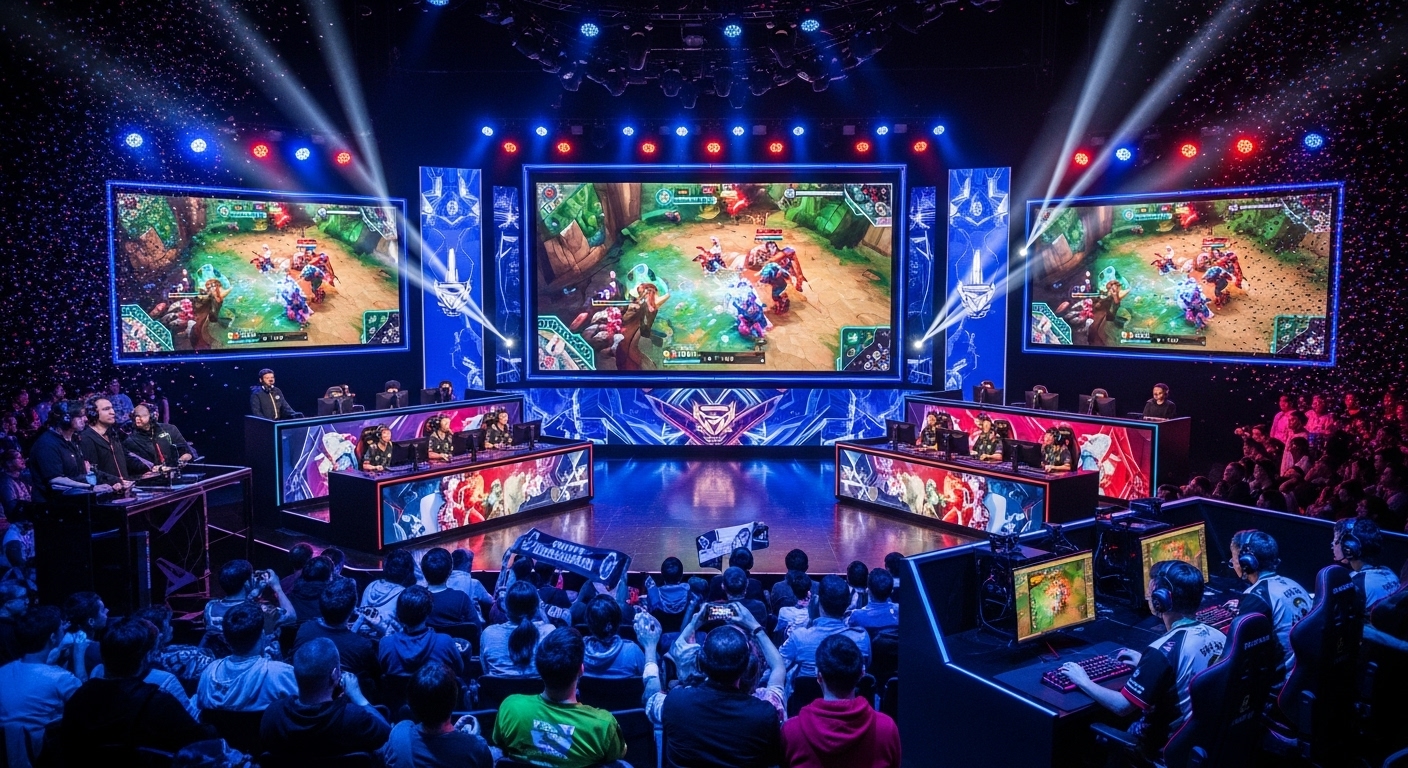
The heart of esports lies in its tournaments. These events are grand spectacles, often held in massive arenas filled with cheering fans. From the League of Legends World Championship to The International, esports events rival the excitement of traditional sports finals.
Broadcasting platforms have played a huge role in the success of these tournaments. Millions of viewers tune in to watch matches live, interacting with commentators and communities online. Esports commentary, or “casting,” has become an art form in itself, combining analysis, excitement, and storytelling to keep fans engaged.
The production quality of esports events has also evolved tremendously. High-definition graphics, instant replays, and crowd reactions create an immersive viewing experience. Esports has blurred the line between digital and physical entertainment, bringing together technology, storytelling, and competition in a unique way.
Esports and Education
Interestingly, esports has also entered the realm of education. Universities and colleges around the world now offer scholarships for esports players, recognizing their talent and dedication. Esports management and game design courses are becoming common, preparing students for careers in this fast-growing industry.
Some schools have introduced esports programs to teach teamwork, leadership, and strategic thinking. These initiatives show that gaming can foster valuable life skills and even open career paths beyond playing—such as coaching, event management, broadcasting, and marketing.
The Economic Impact of Esports
Esports has grown into a multi-billion-dollar industry. The revenue comes from multiple streams: sponsorships, advertising, merchandise, media rights, and ticket sales. Major brands from outside the gaming industry—such as automobile companies, energy drinks, and apparel manufacturers—have entered the scene to reach younger audiences.
Streaming platforms have also played a huge role in monetizing esports. Streamers and professional players often attract millions of followers, generating income through subscriptions, donations, and brand deals. This ecosystem supports not only players but also a wide network of professionals including commentators, analysts, event organizers, and content creators.
The Cultural Influence of Esports
Esports has become a major part of youth culture. It has influenced fashion, music, and even language. Gamers and streamers are now viewed as celebrities, commanding huge online followings. Memes, in-game celebrations, and player rivalries have become cultural touchstones.
Esports also serves as a bridge between technology and creativity. The artistry in game design, the storytelling of tournaments, and the sense of community among fans create a unique cultural identity. Furthermore, esports promotes inclusivity, as players from different backgrounds, genders, and countries compete on equal footing in virtual arenas.
Challenges Facing the Esports Industry
Despite its success, esports faces several challenges. One of the biggest issues is maintaining player health and well-being. Professional gamers often practice for long hours, which can lead to physical strain and mental burnout. Organizations are now focusing on better training routines, health programs, and mental support systems to ensure the longevity of players’ careers.
Another challenge is the regulation of esports. Unlike traditional sports, esports lacks a unified governing body. Each game developer sets its own rules and structures, which can lead to inconsistencies. Issues like cheating, match-fixing, and online harassment also pose risks to the industry’s integrity.
Additionally, the rapid growth of esports has sparked debates about sustainability. With new games constantly emerging, maintaining audience interest can be challenging. However, the adaptability of esports gives it an advantage—it can evolve quickly, embracing new technologies and trends to stay relevant.
The Role of Technology in Esports Growth
Technology is at the heart of esports. From high-performance gaming PCs to advanced broadcasting tools, technology has enabled esports to reach new heights. The development of faster internet speeds and cloud computing has made global competition seamless.
Virtual reality and augmented reality are expected to shape the future of esports, offering more immersive experiences. Artificial intelligence and data analytics are also being used to enhance player performance, study opponents, and improve strategies.
Streaming services have given esports unprecedented exposure. Fans can watch matches live, interact with players, and even participate in community tournaments. This direct connection between players and audiences has made esports more engaging than ever.
The Future of Esports
The future of esports looks incredibly promising. As technology continues to evolve, the industry will likely expand into new territories. Mobile gaming, for instance, is becoming a major driver of esports growth, especially in regions like Southeast Asia and South America.
The inclusion of esports in major sporting events is also being discussed globally. Some countries have already recognized esports as an official sport, and it is being considered for inclusion in multi-sport competitions. This recognition further legitimizes esports as a respected and structured form of competition.
As more young people pursue careers in gaming and digital media, esports will continue to shape the cultural and economic landscape of the 21st century. It represents the convergence of entertainment, innovation, and competition in a digital age.
Women in Esports
One of the most positive developments in recent years has been the increasing participation of women in esports. Female players, commentators, and team managers are breaking barriers and proving that gaming is for everyone. While challenges such as gender bias and online harassment persist, the community is becoming more inclusive with initiatives that promote equality and representation.
Women-led teams and tournaments are gaining visibility, inspiring the next generation of female gamers to pursue esports professionally. Diversity not only enriches the industry but also brings new perspectives and creativity to the gaming world.
Esports and Traditional Sports: A New Relationship
Rather than being competitors, esports and traditional sports are finding ways to complement each other. Many traditional sports organizations now invest in esports teams, recognizing the shared values of strategy, teamwork, and discipline. Esports offers a way to engage younger audiences who may not follow conventional sports.
Moreover, sports simulation games like FIFA, NBA 2K, and Madden bridge the gap between the two worlds. Professional athletes often participate in gaming tournaments, blurring the lines between physical and digital competition. This synergy hints at a future where esports and traditional sports coexist and thrive together.
Conclusion: The Power of Digital Competition
Esports has evolved from a small community of passionate gamers into a global movement that defines modern entertainment. It embodies innovation, determination, and creativity. Through skill, teamwork, and technology, esports has proven that competition doesn’t need a physical field or a ball to capture the hearts of millions.
As we move forward, esports will continue to break boundaries, unite people across cultures, and redefine what it means to be an athlete in the digital era. It stands as a testament to how human passion, when combined with technology, can create something extraordinary—a world where pixels, strategy, and emotion converge to form the future of competitive play.
Esports is not just the future of gaming—it is the future of global competition itself.