Esports, the world of competitive video gaming, has grown from humble beginnings into a global cultural and economic powerhouse. Once dismissed as a pastime for teenagers in bedrooms, esports has evolved into a legitimate industry with professional players, million-dollar tournaments, massive audiences, and a thriving ecosystem that rivals traditional sports. Today, esports represents not only technological innovation but also a new era of competition, community, and entertainment. This blog explores the rise of esports, its impact on society, the challenges it faces, and its promising future.
The Origins of Competitive Gaming
The concept of competitive gaming can be traced back to the late 1970s and 1980s, when arcade games first gained popularity. Players competed for high scores in titles such as Space Invaders, Pac-Man, and Donkey Kong. These informal competitions were often local, but they planted the seeds for organized competitive gaming.
With the arrival of home consoles and personal computers in the 1980s and 1990s, multiplayer gaming became more widespread. Games like Street Fighter, Warcraft, and Counter-Strike introduced mechanics that encouraged direct competition between players. Local tournaments and fan gatherings allowed gaming communities to emerge, laying the foundation for what would later become professional esports.
The Internet Revolution and Online Gaming
The internet transformed competitive gaming in the 1990s by connecting players across cities, countries, and continents. Online multiplayer games became platforms for skill-based competition. Titles like StarCraft, DotA, and Counter-Strike allowed players to compete in real-time, creating a new global community of competitive gamers.
Online forums and discussion boards became hubs for strategy sharing, tournament organization, and community building. The accessibility of online gaming turned esports from a regional hobby into a global phenomenon. This era established the first international competitive networks and showcased the potential of gaming as a professional endeavor.
The Professionalization of Esports
By the early 2000s, esports began to professionalize. South Korea emerged as a hub for professional gaming, particularly with StarCraft leagues broadcast on national television. Players became celebrities, and professional teams formed with coaching staff, analysts, and structured practice schedules.
Major tournaments started offering substantial prize money, and sponsorship deals became common. Hardware companies, energy drink brands, and media outlets began investing in esports, recognizing its potential for growth. This professionalization transformed gaming from a casual pastime into a serious career opportunity for skilled players.
Popular Esports Genres and Titles
Esports spans multiple game genres, each attracting a dedicated following. Multiplayer Online Battle Arenas (MOBAs) like League of Legends and Dota 2 emphasize strategy, teamwork, and adaptability. First-Person Shooters (FPS) such as Counter-Strike: Global Offensive and Call of Duty demand reflexes, precision, and coordination.
Fighting games like Street Fighter and Tekken highlight one-on-one competitive skill, while Real-Time Strategy (RTS) games such as StarCraft II test resource management and tactical planning. Sports simulations including FIFA and NBA 2K replicate real-world sports in a digital environment. This variety ensures that esports appeals to diverse audiences and supports multiple competitive ecosystems simultaneously.
Major Tournaments and Global Recognition
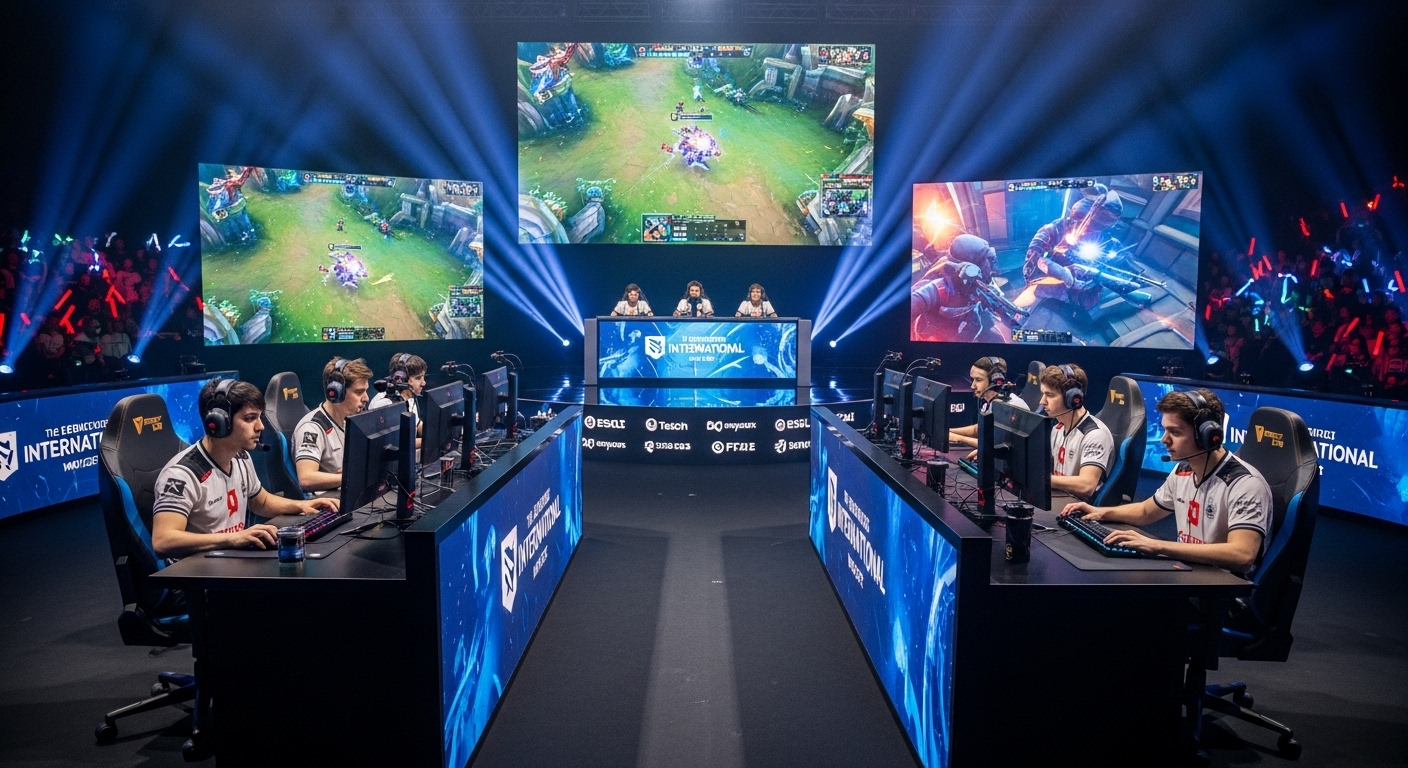
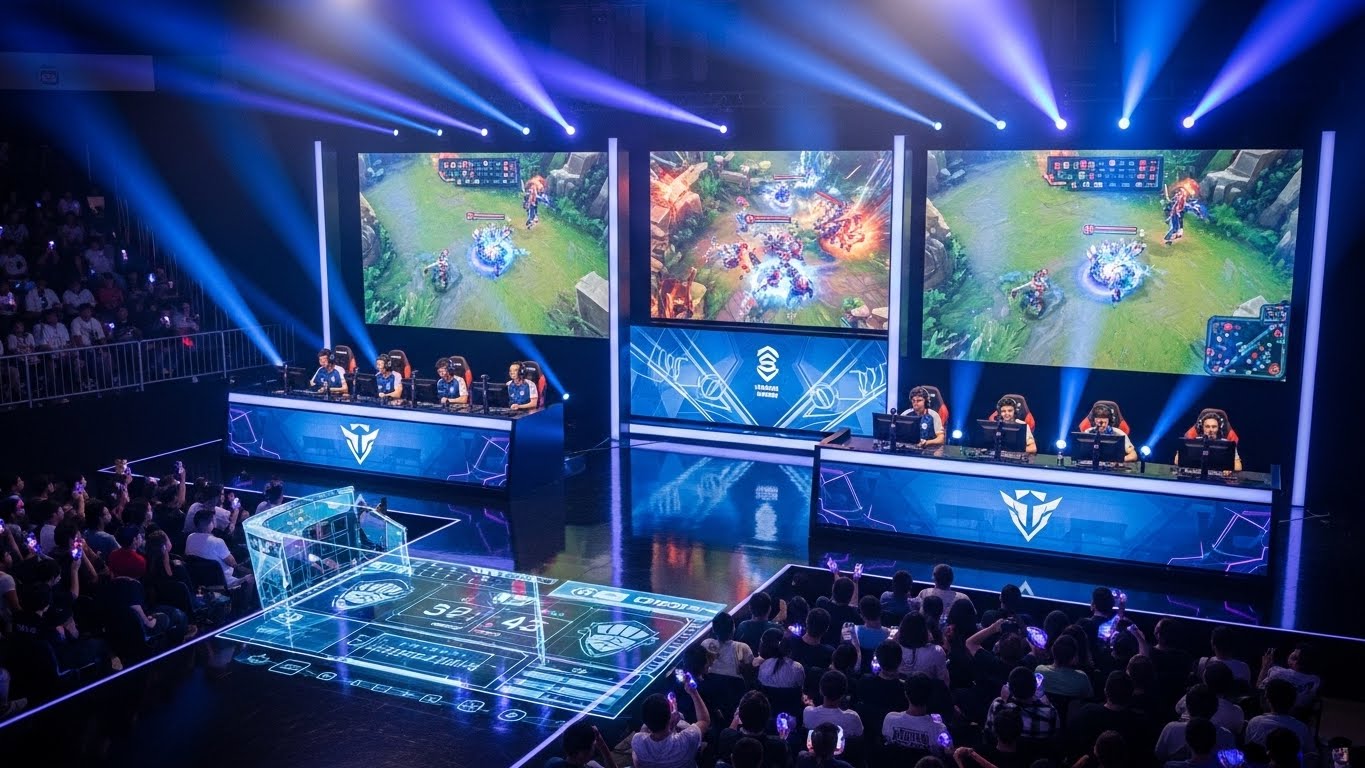
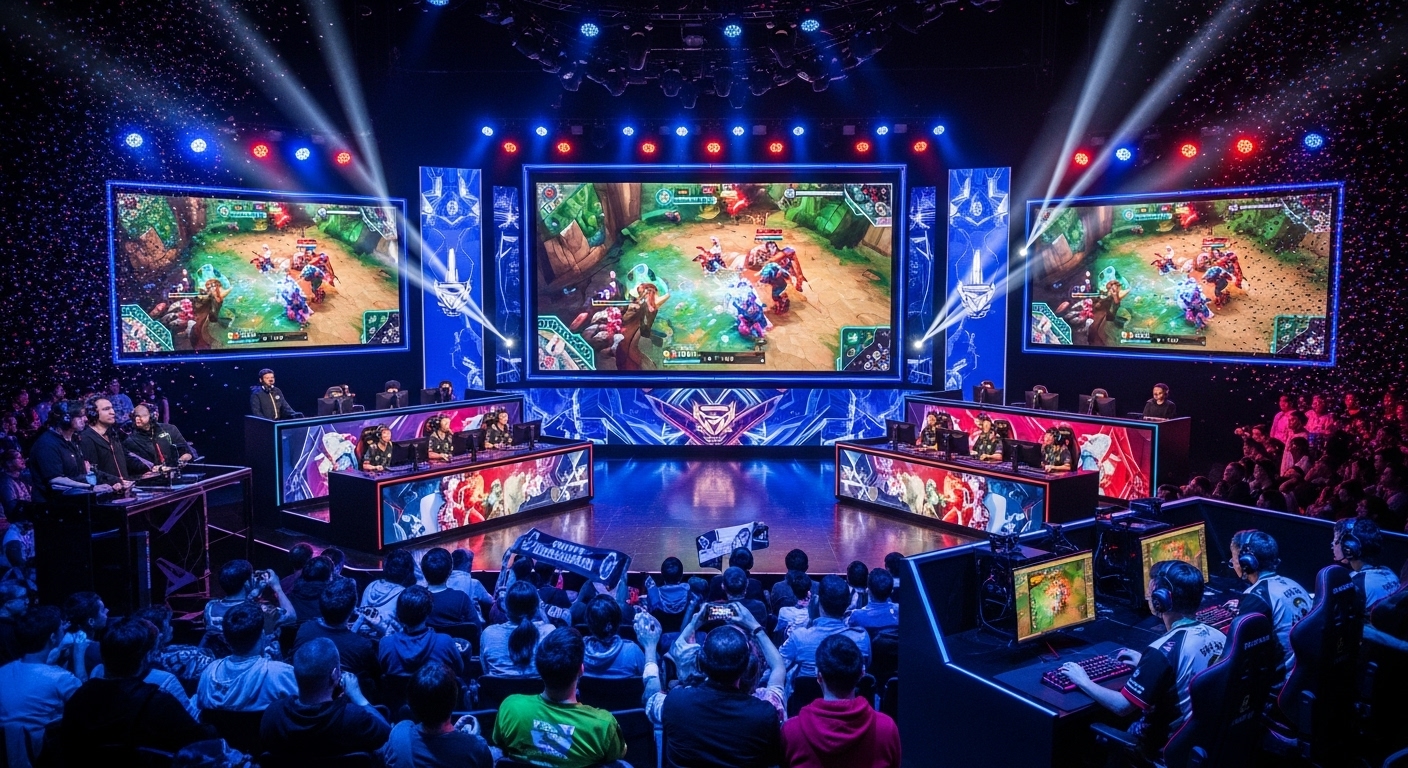
Tournaments are the centerpiece of esports, offering competition, entertainment, and recognition. Events such as The International for Dota 2, the League of Legends World Championship, and CS:GO Major Championships draw millions of online viewers and fill arenas with thousands of fans. Prize pools have reached tens of millions of dollars, highlighting the industry’s legitimacy and economic impact.
Live streaming platforms have amplified esports’ reach, allowing fans to watch events in real time, interact with commentators, and engage with communities. The ability to broadcast competitions globally has transformed esports into a spectator sport, comparable to traditional athletic events.
Esports as a Career
Esports offers more than just competition—it has created an entire ecosystem of careers. Professional players earn salaries, sponsorships, and tournament winnings. Coaches and analysts study strategies and opponents to improve performance. Event organizers, commentators, and journalists contribute to the industry’s infrastructure.
Content creation has also become a major career path. Streamers and video creators engage audiences, promote games, and provide additional entertainment beyond professional competition. Many universities now offer esports programs and scholarships, reflecting the growing legitimacy of esports as a professional pursuit.
The Role of Streaming and Content Creation
Streaming has become a vital component of esports’ growth. Platforms such as Twitch and YouTube Gaming allow players to showcase their skills, interact with fans, and build personal brands. Streamers often provide educational content, entertainment, and behind-the-scenes access to professional play, enhancing fan engagement.
The symbiotic relationship between streaming and esports tournaments has strengthened the industry. Players gain visibility and revenue through streams, while tournaments benefit from increased exposure and audience reach. Content creation is now an integral part of esports culture, expanding the ways fans can participate in the community.
Esports and Traditional Sports
Esports has increasingly gained recognition alongside traditional sports. Major sports organizations and professional teams have invested in esports franchises, and universities have established competitive esports programs. While esports is digital, it demands mental agility, teamwork, and endurance—qualities often associated with physical sports.
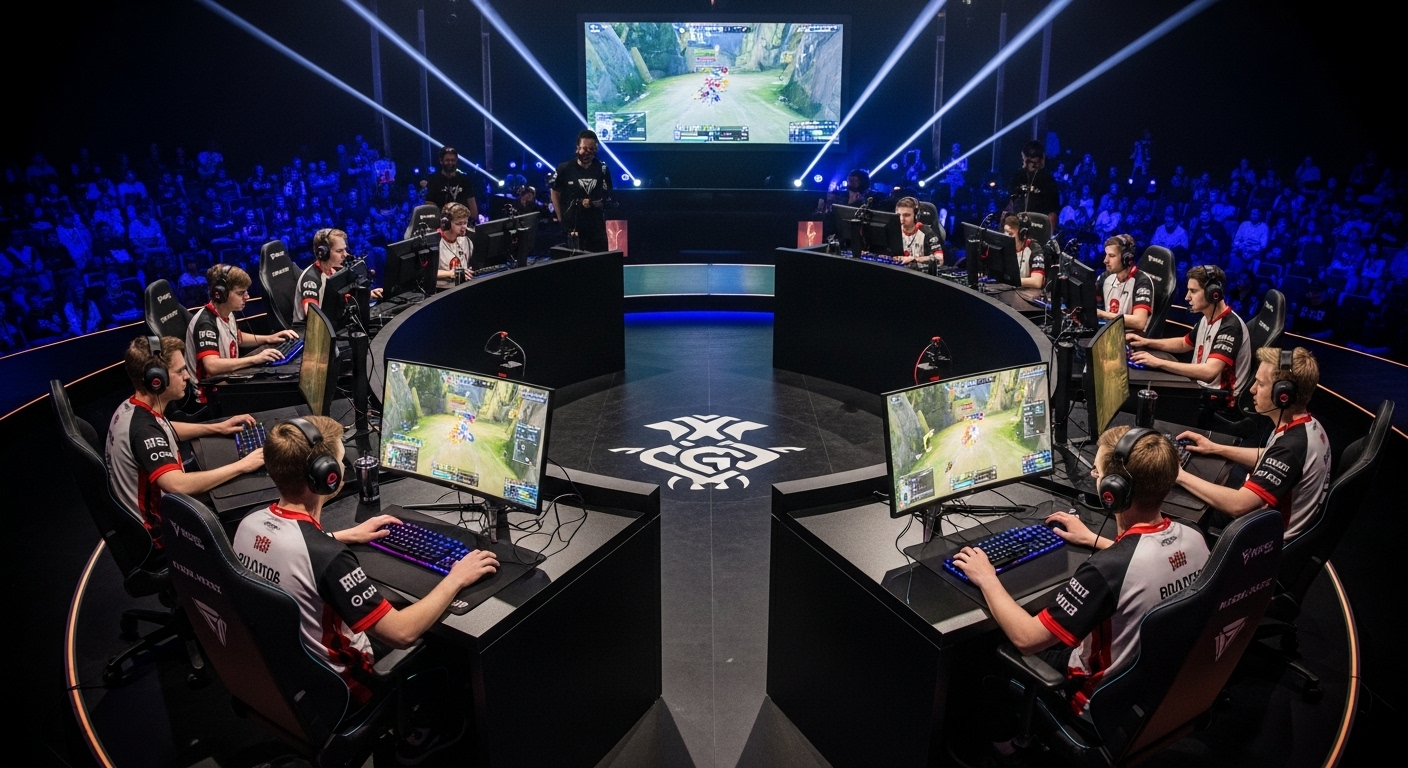
The dedication of professional esports players mirrors that of athletes in traditional sports. Structured practice schedules, team strategy meetings, and performance analysis are all part of the competitive preparation. This convergence has helped esports gain mainstream acceptance and respect as a legitimate form of competition.
Cultural and Social Impact
Esports has become more than a competition—it is a cultural movement. It connects people across regions, languages, and age groups. Online communities provide social interaction, collaboration, and a sense of identity. For many participants, esports represents a platform for creativity, self-expression, and social engagement.
The culture surrounding esports extends into fashion, music, and lifestyle. Fans wear team jerseys, follow players on social media, and attend live events. Esports has created a global subculture that blends digital interaction with entertainment, forging connections that transcend traditional boundaries.
Challenges Facing the Industry
Despite rapid growth, esports faces several challenges. Player health is a significant concern, as long hours of practice and high-pressure tournaments can lead to burnout and physical strain. Organizations increasingly focus on mental health, wellness programs, and balanced schedules to ensure longevity in careers.
Additionally, online competition can be affected by cheating, harassment, and toxicity. Maintaining ethical standards, fair play, and community moderation is essential for sustaining growth. Addressing these challenges will ensure esports remains a safe, competitive, and inclusive environment for players and fans alike.
Technological Innovations Driving Esports
Technology plays a critical role in the evolution of esports. High-performance gaming hardware, advanced streaming platforms, and cloud-based gaming solutions enhance the player and spectator experience. Virtual reality and augmented reality are emerging as potential tools to create more immersive gameplay and interactive events.
Artificial intelligence is also being used for training, strategy analysis, and performance optimization. These innovations continue to push the boundaries of what is possible in competitive gaming, improving both player performance and fan engagement.
The Future of Esports
The future of esports is promising and expansive. Mobile esports is rapidly growing, making competitive gaming accessible to a wider audience globally. Emerging technologies such as VR, AR, and AI-driven coaching will redefine gameplay, spectator experiences, and player training.
Esports is expected to further integrate with mainstream entertainment, attracting sponsorships, media coverage, and recognition in traditional sports circuits. Inclusivity, professionalization, and technological innovation will define the next era of esports, offering opportunities for players, organizations, and fans alike.
Conclusion
Esports has evolved from informal arcade competitions to a billion-dollar global industry. It represents the convergence of technology, strategy, competition, and culture, creating a unique form of entertainment that is both participatory and spectator-friendly.
The rise of esports reflects broader societal trends, including the digitalization of leisure, the growth of online communities, and the recognition of virtual skill as legitimate competition. While challenges exist, the industry’s rapid growth and mainstream acceptance suggest a vibrant and sustainable future.
Ultimately, esports is more than just video games. It is a testament to human skill, strategy, and collaboration in the digital age. It redefines competition, community, and achievement, proving that the digital arena has a profound impact on the real world.